Artistic Philosophy
Curiosity | Authenticity | Bravery | Experiment
Questions are delicious.
My students hear this phrase from me frequently, usually right after I’ve made myself the weirdest person in the room, on purpose. I go first: I’m silly first, vulnerable first, curious first. When I give myself permission to be fully present and authentically myself, everyone around me starts lowering their walls. That’s where my work begins: I get people comfortable so we can get uncomfortable together.
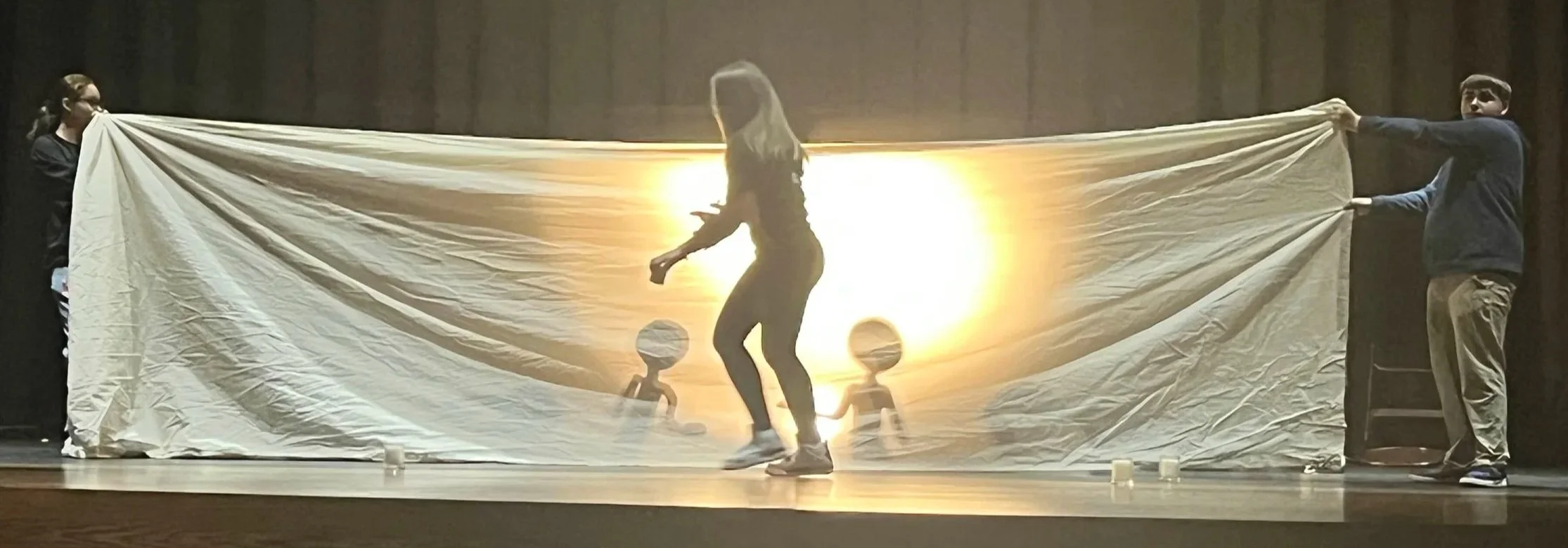
Discomfort in secure spaces is where I find the most exciting work in theatre. The musicals of the Golden Age and my childhood, all showcased through a modern lens, or the plays that have had the wondrous privilege of being on the banned book list at some point, are the shows I love to do. I ache to tell the difficult stories, the historically excluded voices, and work that leaves us with more questions than convenient answers. I need theatre to make all of us involved, from the house to backstage, brave enough to encounter those questions. My job has never been to lower the rigor until a student or artist feels comfortable; instead, I ask what scaffolds need to be in place to reach it. Often, I hold someone’s hand, literally and figuratively, while they take the next step. The show will get done, and it’ll be amazing; the path to get there belongs entirely to the artist, and I’ll be there every step of the way.
As a lifelong learner and the bane of many an educator’s existence, I ask my favorite question: why? Why does the character want what they do? What personal buy-in do they have, or what motivation do they have to keep going? Why this choice, this pause, this story, right now?
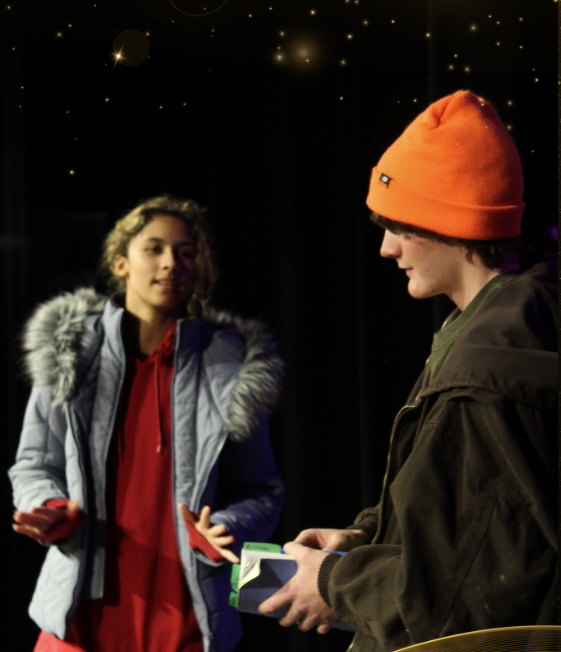
For example, while directing Puffs, a young actor playing Leanne struggled to scream at the end of a battle scene (without giving too many spoilers). Instead of asking her to be louder or more emotional, we discussed the story of her character. Her character just ran into the common room, past the bodies of her friends, and saw, lying on the floor, the boy who was her first friend. The boy who asked her to the dance, who gave her a flower, who was always by her side. For five minutes, we returned to her character’s given circumstances and played with the Magic ‘If’: What might he have meant to her? What does it mean for someone whose entire identity is built around friendship to be in the very room where they lie motionless? She didn’t give me a better scream in the end. I helped her find a reason to scream.
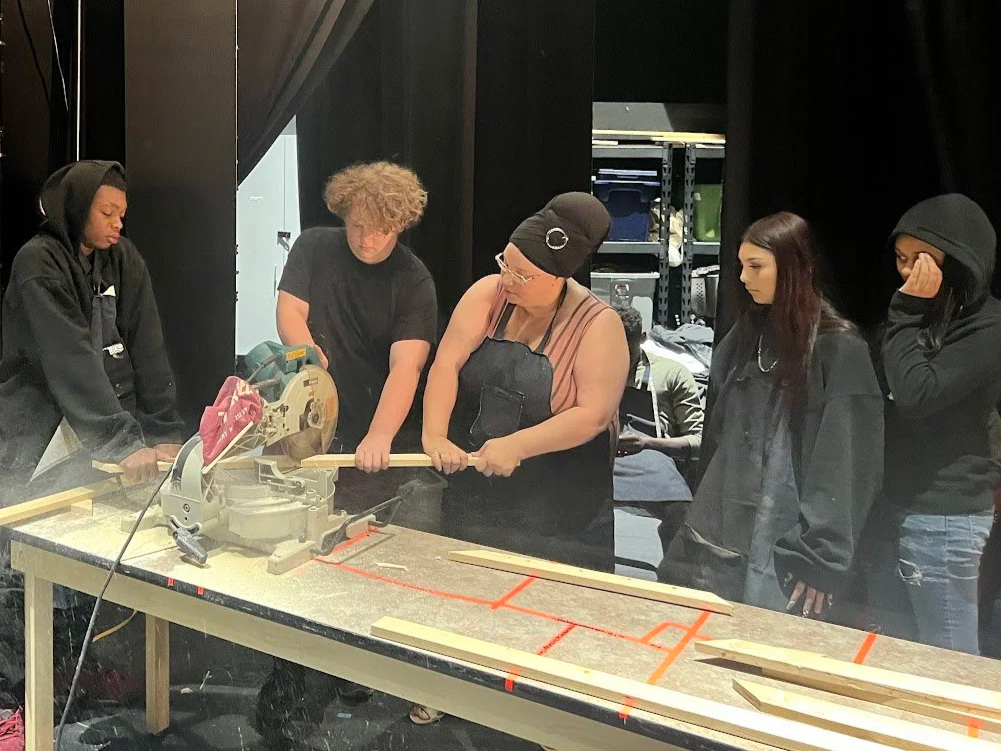
Discomfort in secure spaces is where I find the most exciting work in theatre. The musicals of the Golden Age and my childhood, all showcased through a modern lens, or the plays that have had the wondrous privilege of being on the banned book list at some point, are the shows I love to do. I ache to tell the difficult stories, the historically excluded voices, and work that leaves us with more questions than convenient answers. I need theatre to make all of us involved, from the house to backstage, brave enough to encounter those questions. My job has never been to lower the rigor until a student or artist feels comfortable; instead, I ask what scaffolds need to be in place to reach it. Often, I hold someone’s hand, literally and figuratively, while they take the next step. The show will get done, and it’ll be amazing; the path to get there belongs entirely to the artist, and I’ll be there every step of the way.
As a lifelong learner and the bane of many an educator’s existence, I ask my favorite question: why? Why does the character want what they do? What personal buy-in do they have, or what motivation do they have to keep going? Why this choice, this pause, this story, right now?
For example, while directing Puffs, a young actor playing Leanne struggled to scream at the end of a battle scene (without giving too many spoilers). Instead of asking her to be louder or more emotional, we discussed the story of her character. Her character just ran into the common room, past the bodies of her friends, and saw, lying on the floor, the boy who was her first friend. The boy who asked her to the dance, who gave her a flower, who was always by her side. For five minutes, we returned to her character’s given circumstances and played with the Magic ‘If’: What might he have meant to her? What does it mean for someone whose entire identity is built around friendship to be in the very room where they lie motionless? She didn’t give me a better scream in the end. I helped her find a reason to scream.

Curiosity is the most used skill in my toolkit. Through that desire I gain vocabulary, so I can best communicate with every individual I come across, and why I strive to have experience in a variety of areas. I experiment with writing, directing, acting, designing, and every area in between. The search for why a story has been labeled too difficult to produce, why an artist does not feel invited into a space, why communities cannot afford to see the work being made about people like them, and why theatrical traditions are treated as immovable is a lifelong endeavor.
That requires care, but I do not believe care and rigor are opposites. When care is expressed, growth is more possible. Artists need information, boundaries, accessibility, agency, and permission to say ‘no’ so that their ‘yes’ can mean something. Rehearsal rooms should be secure spaces for artists to be uncomfortable, to stretch, and expand into more empathic beings. We investigate, communicate, fail, revise, and try again. I hold the scaffold while it is needed and celebrate when it no longer is.
Years later, I do not expect an artist to remember every note I gave or every exercise we’ve done. Instead, I hope they all remember something smaller: the question that changed how they approach characterization, the moment they discovered they could do something that terrified them before, or that crazy lady-of-a-director who was willing to look ridiculous first. I don’t want artists to need me. I’m about giving them enough curiosity, support, and courage to discover how much they can do without me.
I go first. We get uncomfortable together. Then, often with tears, I let them go.